Fashion in the 1900s Fashion of Shoes in 1990s
Way in 1910 was unique. It retained much of the class and style of the previous era, simply with a simplified flare. Nevertheless, Earth War I had an immense impact in the everyday lives of individuals and families, including on what they wore.
Although the decade of the 1920s is known more than for radical changes in fashion, most of those major changes can be traced back to the beginning of the decade, with fashion trends in 1910.
Below is a quick expect at some of the styles and clothing that your Western ancestors are probable to have worn during this period.
Women's 1910s Fashion
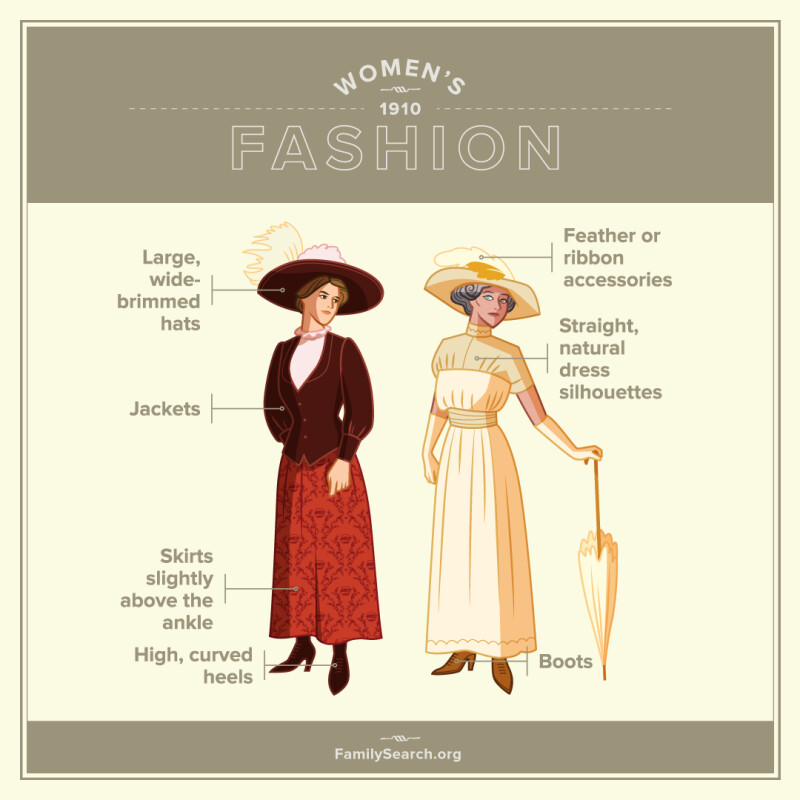

Women's way from 1910 to 1919 had a very distinct look. Some of its almost recognizable features include the post-obit elements.
Hats
The decade featured big, stylish hats. During the decade, it became widely popular for women to wear big, broad-brimmed hats adorned with feathers, ribbons, veils, or other accessories.
Dresses and Skirts
The way silhouette softened significantly during the decade, with less accent on the S-shape that corsets created and more focus on a fluid, more flowing look.
This shift was reflected in the way dresses and skirts were designed. Dress lengths fell to simply above the ankle, which was college than the floor-length brawl gowns of previous years.
In contrast to the hoop skirts of previous decades, the 1910s brought a new trend, where skirts tightened effectually the ankle. These skirts looked almost like a longer, more flowing version of the pencil skirts of today. They were often worn with a tunic, jacket, or even a fur-lined coat.
Shoes
Boots were a pop option for women during this decade, and there was a broad diverseness of evolving Edwardian styles to cull from. High, curved heels were a big trend during this decade for men and women alike.
Many women's boots resembled the mode of men's church shoes, but with feminine touches, such as rounder shapes, thinner heels, and decorative bows. In the evening, women would wear courtroom shoes, which more than closely resembled small-scale heels or slippers.
Men's Fashion in 1910s

Men'south fashion has not seen as dramatic a change since 1910. What men wore then is very similar to what you might find in a shopping mall today, with some slight differences.
For instance, while coattails were still worn during the evenings or for special events, this decade marked an of import shift to a more casual look, where suits became more functional, and styles extended beyond the silk top hat.
Hats
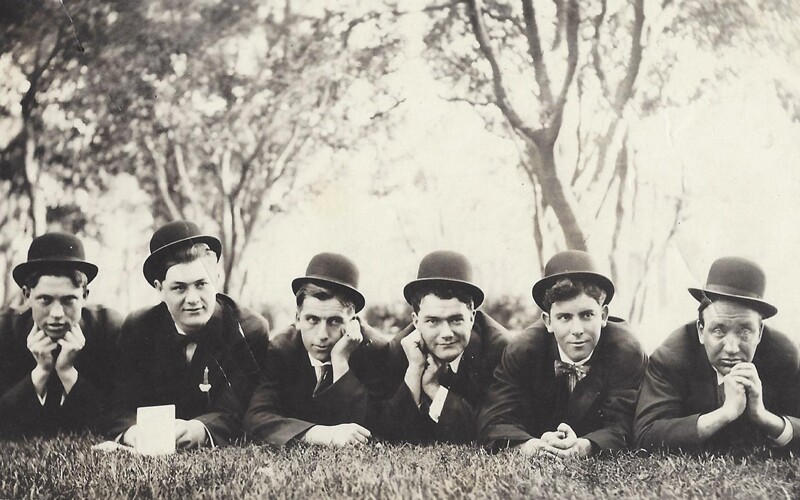
One of the most recognized features from early on in the century are men'due south hats. Felt derby and bowler hats became standard accessories for well-dressed men of the 1910s, and these hats were probable more comfy than the silk top hats that men reserved for formal events.

After the war, fedoras too grew in popularity, correct along with flat sportsman caps and straw boater hats for the summer months.
Suits
At the first of the decade, it was pop for men to article of clothing a loose-fitting, long suit called a sack suit. Once the war ended, younger men wanted something different than what their fathers had worn, which resulted in more than tailored-fit, colored suits. These suits felt more than familiar to those who had spent months in a war machine compatible.
Shoes
Men had several options to cull from when it came to footwear, many of which resemble today's wearing apparel shoes, occasionally with a few extra buttons. Some styles were more formal than others, just in many cases the trend matched women's footwear, with a high, curving heel.
1910s Fashion for Children
The 1910s were a significant period when information technology came to children. In this era, children stopped wearing smaller versions of developed clothing and began to wear clothing fabricated specifically for them.

Boys
Knickers and knee joint socks became standard for boys during this menstruation. Fauntleroy suits were briefly popular during the 1910s, but soon became reserved for formal wear. More colors began to announced, pushing the boundaries abroad from the standard nighttime and white.

Girls
Girls began to article of clothing fabric that was more durable and less delicate, allowing them to move and play. Dresses became shorter and had less detail due to fabric rationing during Earth War I. With less time for laundry, styles became looser, making clothes easier to wash. Articulatio genus socks also became popular for girls, equally did pilus ribbons.

Details such as these make history come to life. Do you know what your ancestors wore during the years 1910–1919? Y'all may be able to notice pictures of them in FamilySearch Memories, a repository of old family photos. You lot can as well upload family unit photos yourself and show off the fashion of your grandparents or great-grandparents in 1910!
Search 1920 Census Records Online | Larn Why Information technology'due south Called the Lost Generation | See What Happened 100 Years Ago Today |
0 Response to "Fashion in the 1900s Fashion of Shoes in 1990s"
Post a Comment